The Impact of Family Dynamics on Child Development: A Clinical and Relational Health Perspective
Introduction
The development of a child is not an isolated process but is deeply embedded within a complex web of family relationships, roles, and interactions. From birth, and even before, the family environment plays a pivotal role in shaping a child’s psychological, social, and physiological pathways. Family dynamics the patterns of interactions and relationships within the family can significantly influence a child’s emotional regulation, cognitive development, and future health outcomes. At ARKA Anugraha Hospital, we adopt a systems-based, integrative approach to understanding and addressing the impact of family dynamics on child development, recognizing that the family is the child’s first and most influential environment.
The Family as a System: Emotional Interdependence and Relational Health
To truly comprehend the impact of family dynamics, it’s essential to view the family through the lens of systems theory. In this view, the family functions as an interconnected unit where the behavior and emotional states of one member inevitably affect the others. Each member’s actions and feelings contribute to a dynamic equilibrium or homeostasis, and the family as a whole adapts to maintain this balance.
Central to this theory is emotional interdependence, which suggests that the health of individual family members is closely tied to the emotional health of the group. As one member’s emotional or behavioral state changes, the entire system reacts, often creating patterns of interaction that can persist for generations. These patterns, which can range from healthy, supportive interactions to unhealthy conflict or neglect, shape the emotional and behavioral development of children.
The Framework of Relational Health: A Critical Determinant of Development
Relational health is an emerging paradigm that recognizes the quality of the parent-child relationship as a central determinant of a child’s socioemotional, cognitive, and neurobiological outcomes. In this framework, the child’s development is understood to be transactional and bidirectional both parents and children influence each other’s behavior and emotional states.
Healthy relational health within the family is characterized by:
Secure attachment: A stable, nurturing bond between child and caregiver, which provides a secure base for exploration and learning.
Effective communication: Open, clear, and empathetic exchanges that support emotional regulation and cognitive development.
Affective responsiveness: The ability of caregivers to respond to their child’s emotional cues with appropriate sensitivity and care, fostering resilience and emotional intelligence.
Dimensions of Relational Health and Their Developmental Impact
A healthy family system is characterized by four key dimensions: cohesion, flexibility, communication, and affective responsiveness. These dimensions directly impact a child’s ability to develop emotional regulation, problem-solving skills, social competence, and cognitive abilities. Dysfunction in any of these dimensions can hinder a child’s development and increase the risk of mental health challenges.
Dimension
Clinical Significance
Impact on Development
Cohesion
Emotional bonding and family togetherness
Promotes secure attachment, self-esteem, and confidence.
Flexibility
The ability to adapt to stress and change
Enhances problem-solving and adaptive coping skills.
Communication
Verbal and non-verbal exchanges
Facilitates language development and emotional intelligence.
Affective Responsiveness
The ability to respond emotionally to the child’s needs
Supports emotional regulation and social competence.
Family Homeostasis, Boundaries, and Stress Management
interactions remain predictable. This stability provides children with a sense of security. However, families that are overly rigid or resistant to change may create dysfunctional dynamics that stifle a child’s emotional growth.
Healthy Boundaries: A healthy family maintains flexible boundaries that allow for individual growth and external influences while ensuring strong internal cohesion. In contrast, families with rigid boundaries often struggle with triangulation, where two members form an alliance against a third, which stalls the emotional differentiation of the child.
Impact of Family Stress: Chronic family stress due to conflict, financial instability, or caregiving burdens can disrupt homeostasis, leading to toxic stress that affects the child’s neurodevelopment. The HPA axis, which governs the stress response, becomes overactivated, leading to sustained high levels of cortisol, which impacts brain function and emotional regulation. Chronic stress can also cause physical health issues, such as increased susceptibility to infections, digestive problems, and even cardiovascular issues in children.
How Family Dynamics Affect Child Development: Biological and Functional Mechanisms
The effects of family dynamics extend beyond emotional regulation and are biologically embedded in the child’s developing systems. Chronic stress and instability within the family can cause long-term changes in brain structure and function, particularly in areas responsible for reasoning, memory, and emotional responses.
Neurodevelopmental Impact of Family Stress:
Neuroplasticity and Executive Function: Chronic family stress, especially in the form of toxic stress, impairs the development of the prefrontal cortex, the area of the brain responsible for executive functions like planning, attention, and impulse control. This can manifest as difficulties in school, social relationships, and self-regulation.
Emotional and Behavioral Dysregulation: Dysfunctional family dynamics, such as high-conflict relationships or neglect, can cause children to adopt maladaptive coping strategies, such as aggression, withdrawal, or perfectionism, which persist into adolescence and adulthood.
The Microbiota-Gut-Brain Axis: Family Stress and Neuroinflammation
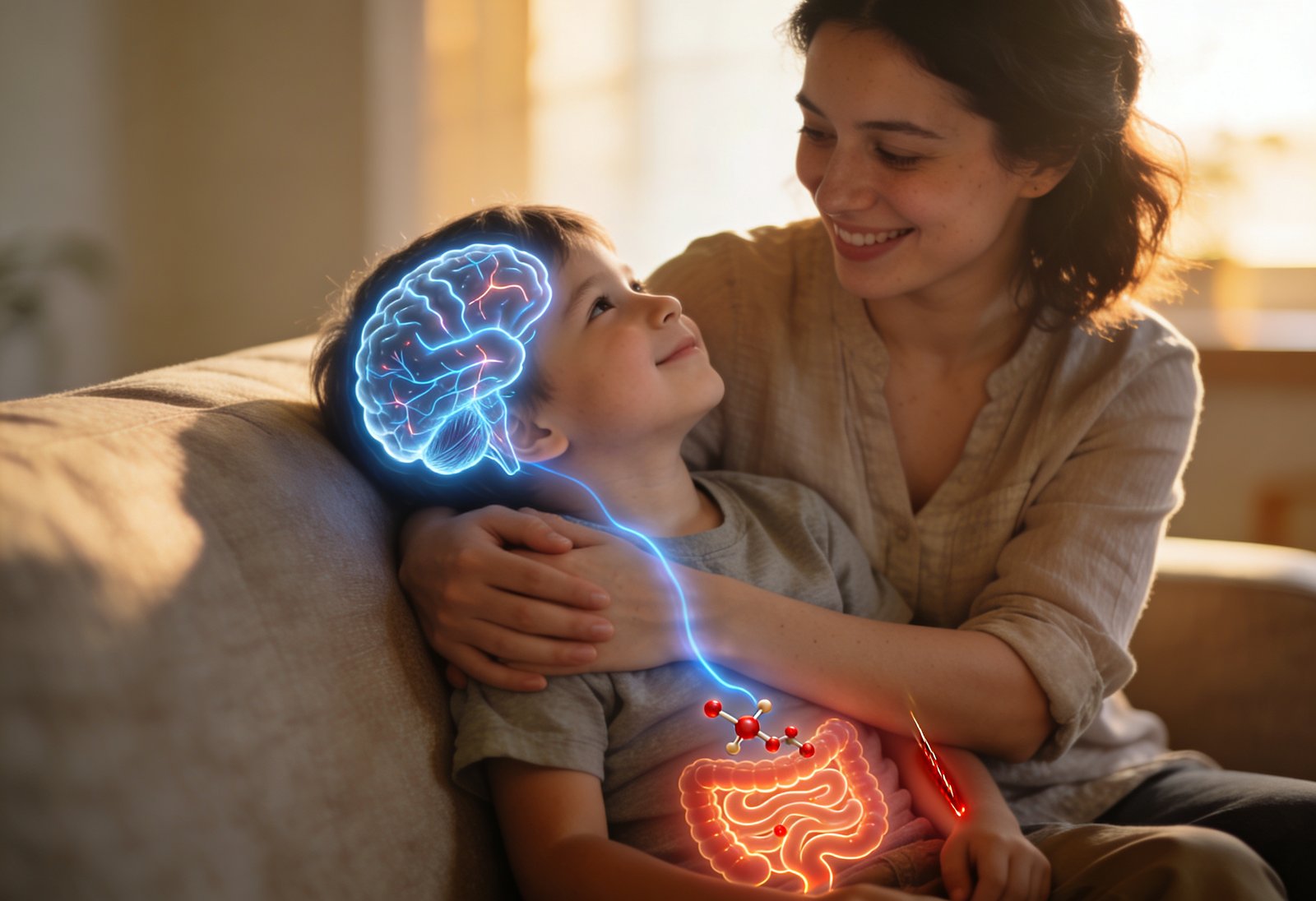
An emerging area of research in integrative medicine is the role of the microbiota-gut-brain axis in childhood development. The gut microbiome communicates with the brain via the vagus nerve and immune signaling pathways. Dysbiosis (imbalance in gut bacteria) caused by chronic stress from family dysfunction can lead to neuroinflammation, which has been associated with mental health issues like anxiety, depression, and behavioral problems.
Stress-Induced Gut Dysbiosis: Early life stress, such as maternal anxiety or family conflict, alters the gut microbiome, leading to inflammation that affects brain function, particularly in regions involved in mood regulation.
Altered Brain Connectivity: Dysbiosis impacts brain connectivity, particularly in areas related to social processing and emotional regulation, increasing vulnerability to mental health disorders.
The Role of Parenting Styles in Shaping Development
Parenting styles are a key element in family dynamics and have significant implications for child development. The style of parenting influences the child’s emotional regulation, social skills, and academic performance. Research identifies four primary parenting styles, each associated with different developmental outcomes:
Authoritative Parenting: Characterized by high warmth and clear boundaries, this style promotes resilience, self-regulation, and high academic performance.
Authoritarian Parenting: High control with low warmth, leading to children who may be well-behaved but struggle with anxiety, low self-esteem, and rebelliousness in adolescence.
Permissive Parenting: High warmth with few boundaries, which can result in children with poor self-control and entitlement issues.
Neglectful Parenting: Low warmth and structure, often leading to the most significant developmental issues, including delinquency, substance abuse, and emotional dysregulation.
Family Dynamics and Child Outcomes: Clinical Implications
The influence of family dynamics on child health cannot be overstated. Dysfunctional family dynamics often manifest in the form of behavioral and emotional problems, such as:
Aggression or withdrawal in children due to unresolved conflict.
Academic struggles and cognitive deficits stemming from lack of emotional support.
Physical health symptoms, including sleep disturbances, chronic pain, and metabolic dysfunction.
Children in families with high conflict or neglect often develop role-based coping mechanisms, such as becoming the “perfect child” (perfectionism), “scapegoat” (acting out), or “lost child” (withdrawal). These coping mechanisms can lead to long-term emotional and behavioral problems if not addressed.
Integrative Care at ARKA Anugraha Hospital: A Family-Centered Approach
At ARKA Anugraha Hospital, we take a comprehensive, family-centered approach to child development. Recognizing the importance of relational health, our interventions aim to support not just the child but the entire family unit. Led by Dr. Smriti Bhagiratha, we combine functional medicine, psychotherapy, and preventive care to address both the biological and psychosocial factors that impact child development.
Key Components of Family-Centered Care:
Personalized Family Support: We assess each family’s dynamics and provide tailored interventions to improve communication, cohesion, and flexibility.
Mindfulness and Stress Reduction: We incorporate mindfulness-based stress reduction (MBSR) techniques to help parents manage their stress and improve emotional responsiveness to their children.
Nutritional Support: Functional medicine interventions, including nutrition counseling, to address gut health, reduce inflammation, and optimize brain function.
Conclusion: Strengthening Families for Healthier Child Development
Family dynamics are among the most powerful factors influencing a child’s development. By recognizing the systemic nature of family relationships and providing integrative, root-cause interventions, ARKA Anugraha Hospital supports families in creating nurturing environments where children can thrive. Our comprehensive approach ensures that children grow emotionally, cognitively, and physically in a way that sets them up for lifelong success and well-being.
FAQs
How can family dynamics affect my child’s behavior?
Family dynamics can significantly influence a child’s emotional regulation and coping strategies. Conflict or neglect can lead to anxiety, depression, and behavioral issues.
What are the signs that my child is impacted by family stress?
Signs include aggression, withdrawal, poor academic performance, and physical symptoms like stomachaches or sleep disturbances.
How do different parenting styles influence development?
Parenting styles like authoritative parenting promote emotional stability and academic success, while authoritarian or permissive styles can lead to emotional dysregulation and behavioral problems.
What role does family cohesion play in child development?
Strong family cohesion provides emotional security, fosters self-esteem, and supports resilience in children, helping them cope with challenges.
Can family stress affect my child’s health long-term?
Yes, chronic family stress can lead to lasting changes in brain development, increase the risk of mental health disorders, and contribute to physical health issues like obesity and cardiovascular disease.